Growing Up on a Pig Farm in the 70s Teaches You Some Things
When driving through the country and you know that smell, you know the one, most people roll up their car windows and gag. Not me. I put my head outside and take in deep breaths. That smells like home to me.
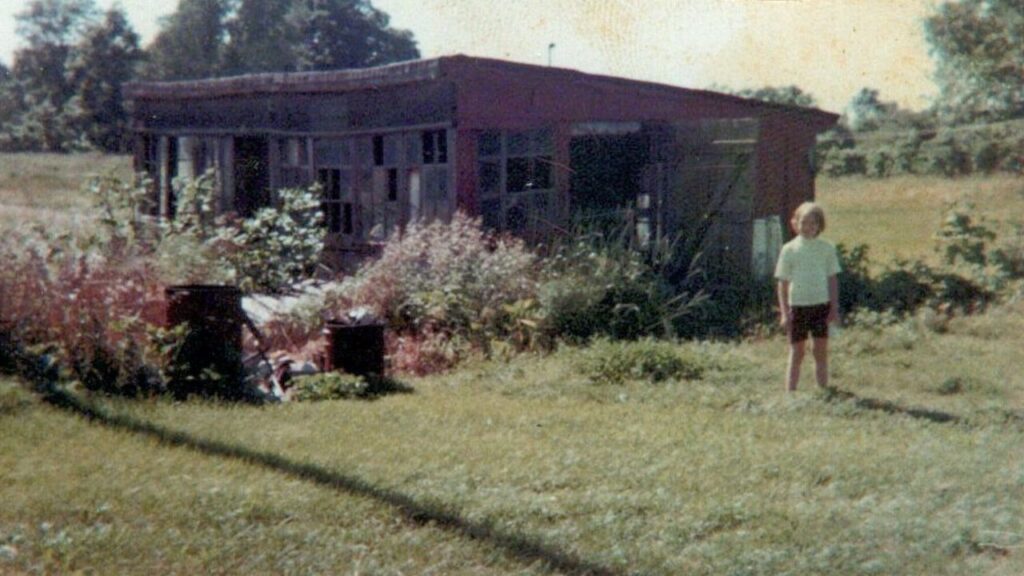
Home, for a stretch of my childhood, was a pig farm outside of Kalamazoo, Michigan. My dad was currently an undercover narcotics detective there. He eventually got out of police work, that’ll be in a future story soon. But for now we lived on a pig farm. None of us knew a single thing about pig farming. I could point at a pig and confirm yes, that is a pig. That was about the extent of it. The education that followed was thorough, specific, and occasionally disgusting in ways I could not have anticipated.
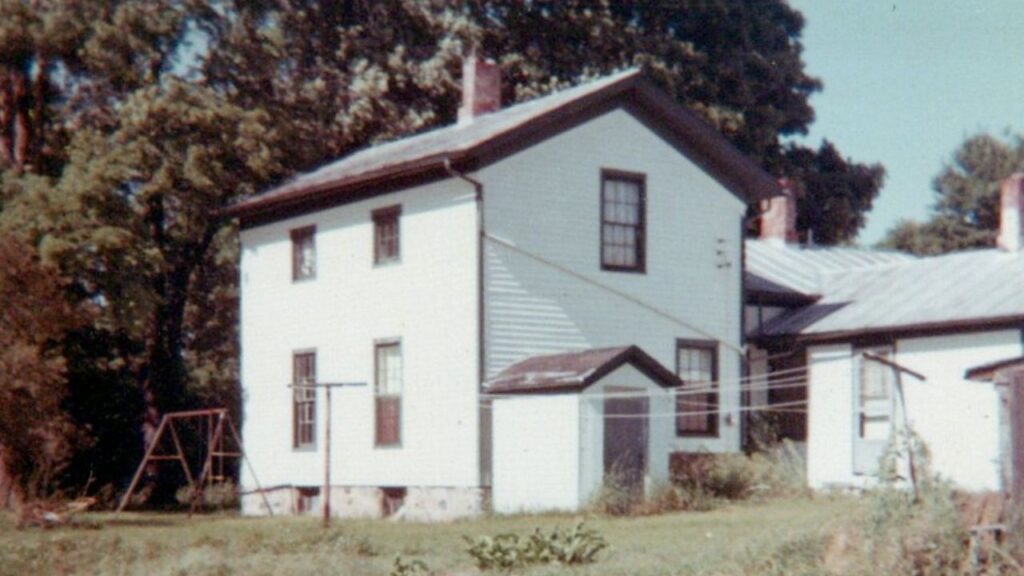
I was in third or fourth grade when we moved there. Kids that age do not have a lot of complicated feelings about their circumstances. There was no moment of standing at the kitchen window thinking, well, this is my life now. There were chores to learn and animals to figure out, and you got started.
The Baseball Pitcher of Portage, Michigan
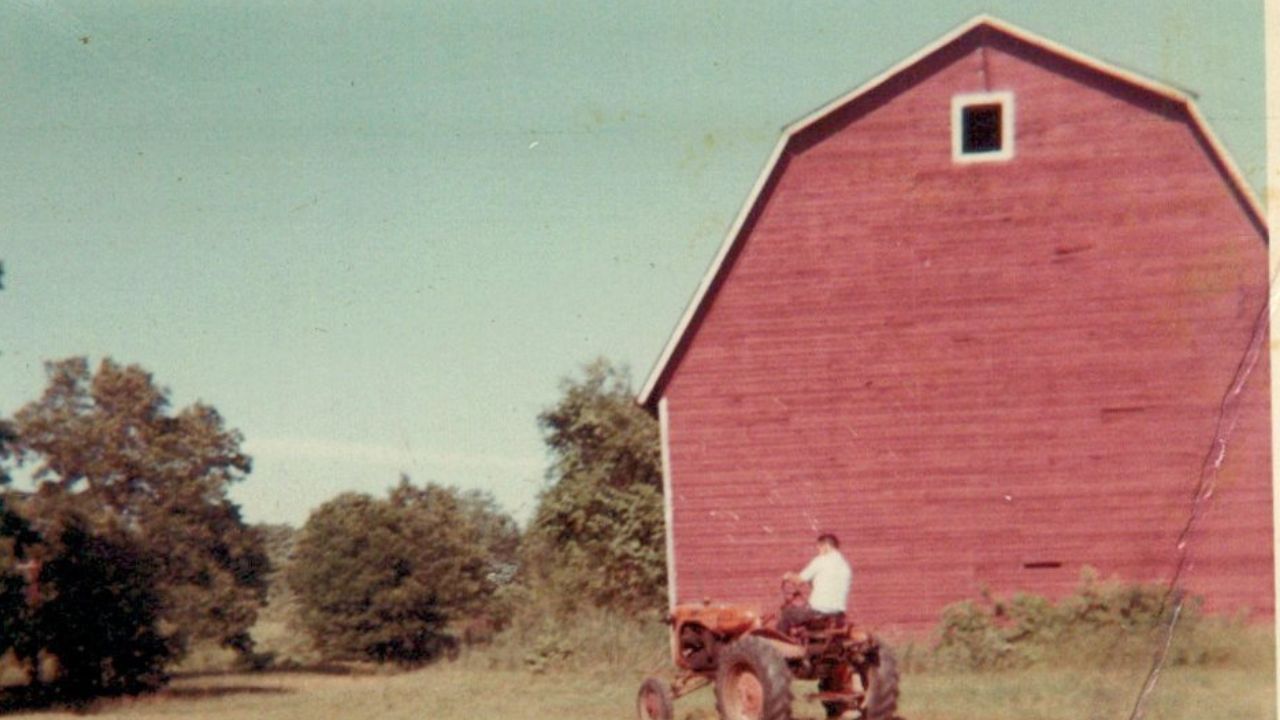
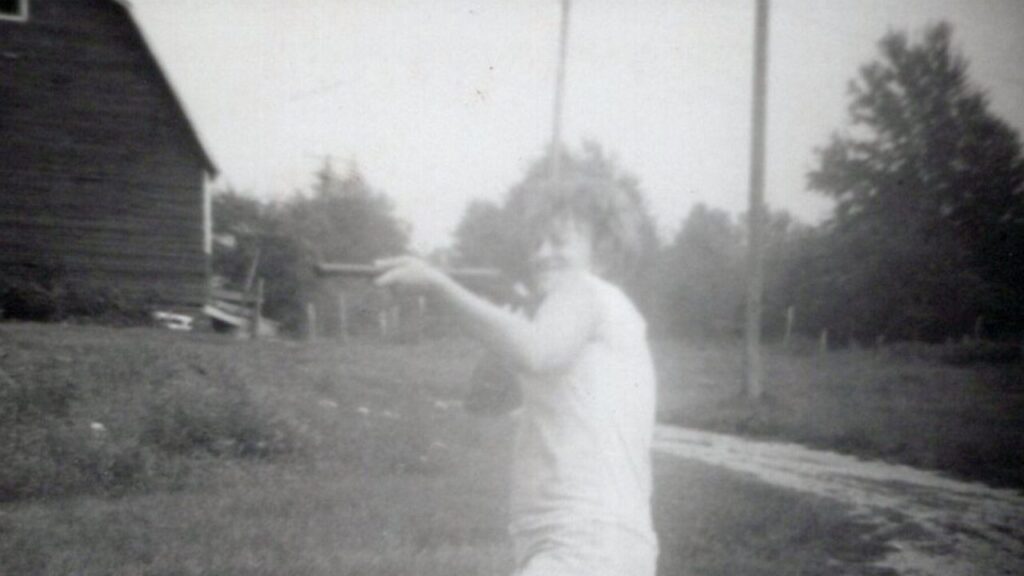
Before the farm had fully absorbed me into its routines, I found my own way to fill the hours. That big red barn sat across a small field from the house, and I decided it was a pitching wall. I would stand in the field with my rubber ball and my baseball glove and throw against the barn for what felt like hours, catching the rebound, throwing again, catching, throwing. I wore two shirts when I did this, one long sleeve under one short sleeve, because that was how baseball players looked on television and I was not going to do this wrong.
I was a tomboy from the start. Always had been, always would be. The two-shirt system felt completely reasonable.
The Cincinnati Reds were my team, because we had once lived in Dayton, Ohio and that was the natural allegiance. As I got older and into high school we would go to games, which felt like the proper culmination of all those hours throwing at a barn.
What a Pig Farm Actually Teaches You
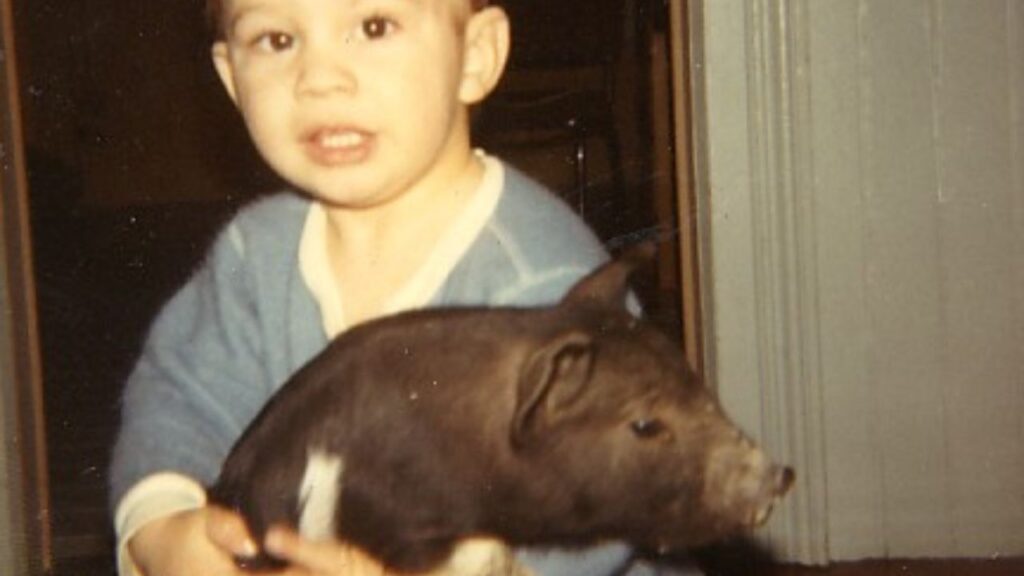
The first real lesson on the farm was about castration.
Now, I am going to tell you something that sounds obvious in retrospect but was apparently not obvious to everyone when we started: you castrate male pigs when they are babies, not when they are already over 250 pounds. This seems like information that should have been available to us before the 250-pound situation arose, but here we are. The big pig castration involved ropes and pulleys set up in the red barn, an attempt to hoist a very large, very unhappy hog into the air, and my dad deciding this was not something his kids needed to witness.
He kept us away from that one. He also kept us away from when it was time to deal with the chickens. Some things he decided were too much, and I have always respected that judgment even if I did not understand it at the time.
The baby pig procedure was a different matter entirely. That one I was part of.
Dad would hold the piglet between his legs and do what needed to be done. He did not have YouTube to consult back then. There was no instructional video. He just knew, the way people on farms have always just known the things that have to be done. Then he would turn back around with the pig still between his legs and a small wound that needed attention, and I would aim the purple disinfectant at the right spot. Four or five piglets in a session, one right after the next. The goal was to hit the wound and not spray my dad, which I managed most of the time.
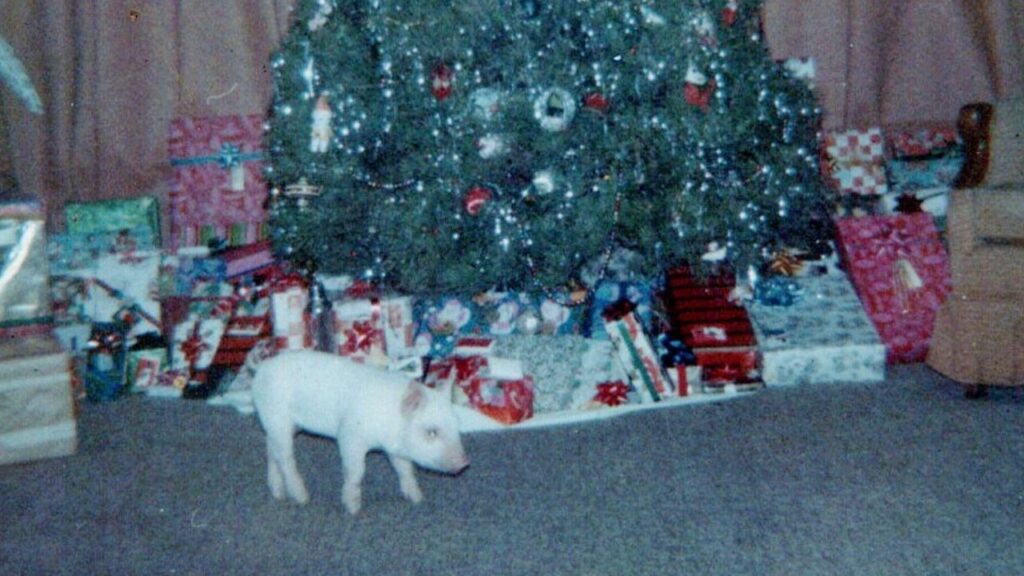
The pigs that needed a few days to recover came into the house. My mom would put the oven shelf grates over the furnace holes in the floor so the piglets would not fall into the ductwork. This was a reasonable and necessary precaution. We had a lot of animals move through that house. There is a photograph somewhere of a baby pig sitting in front of the Christmas tree with the presents behind it, looking like it belongs there, because on a farm in the 1970s it absolutely did.
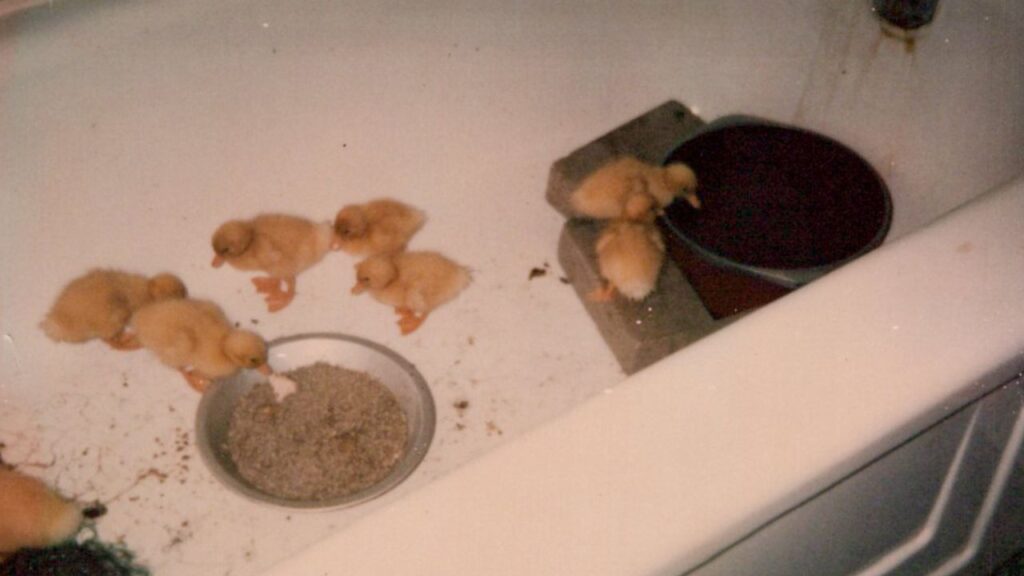
We also had baby ducks in the bathtub at one point, with a plate of feed and a pan of water set up with bricks so they could stand high enough to drink from it. You figure out what each animal needs and you make it work with what you have. That is the main thing a farm teaches you, really. You figure it out and you make it work.
The Night the Pigs Got Out
Did I mention my dad was an undercover narcotics detective? Ok, so Dad had friends who came around the farm at odd hours. Younger than him, friendly enough, always willing to sit around and play cards and stay up late into the night. I remember one evening we were all around the table and somebody said they knew a person named Shirley Burley. We laughed until we could not breathe. That is the kind of thing that gets you at midnight when you are a kid and the adults are in a good mood and the cards are out.
These same friends had a particular quality I noticed but could not name at the time. They did not sleep. Or if they did, it was not on any schedule that matched the rest of the world. It was not until I was an adult and thought back on those visits that I understood what I had actually been looking at. My dad was still working with informants then. Those twitchy, friendly, night-owl card players were not just dad’s friends.
Anyway. I grew up around people who were on drugs without ever having any particular interest in trying them myself. It is hard to be curious about something when you have seen what it actually looks like up close. There was also the understanding that there would be absolutely NO-WAY I could sneak or hid anything from my Dad. So I didn’t.
One of these night-owl visitors is the reason I ended up running through a corn field in the dark.
I was shaken awake by somebody pulling on my big toe. Not gently. The pigs were out. Someone was telling me the pigs were out, and that meant everyone needed to get up and go get them. We never slept in pajamas. You always had clothes on, you just needed to find your shoes, and then you ran. I remember waking up already outside, already moving, and looking around at rows of corn in the dark thinking, right, okay, we are finding the pigs. Running after escaped animals in the middle of the night was just a thing that happened sometimes. You woke up, you put on your shoes, and you started running.
Candy and Apollo
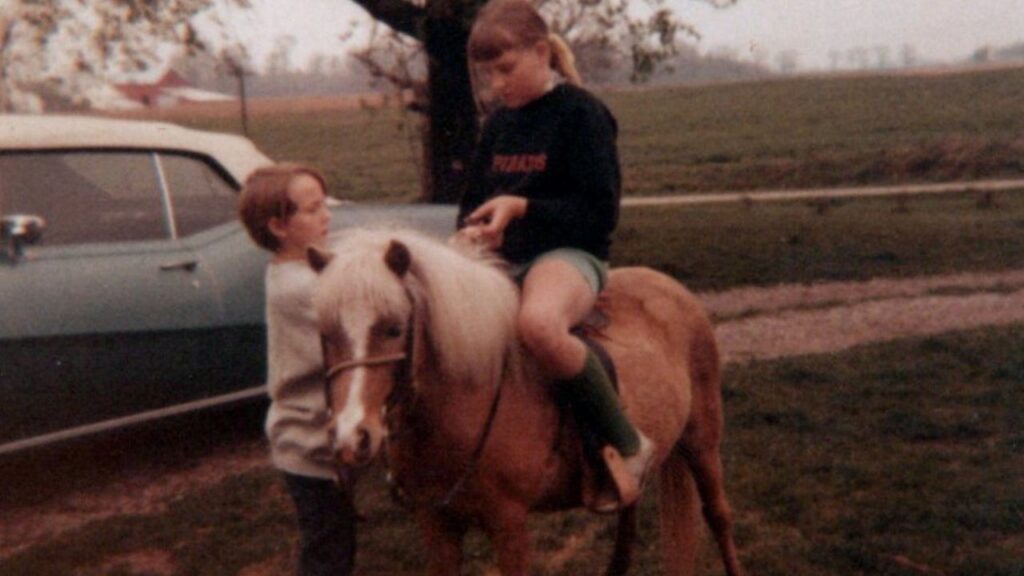
We each had our own horse. My sister’s was Candy and mine was Apollo. We had saddles and bridles, proper equipment, and we used them when the situation called for it. But when you are a kid and the horse is right there and you need to get from here to over there, you just hop on and grab the mane and go. You got where you were going eventually. That felt like all the information the situation required.
We rode often and we rode the way kids on farms ride, which is to say without a lot of ceremony or protective equipment. The horse was there, you got on it, you went. This is also just something you figure out.
Growing up in the 70s: The Barn That Burned
We eventually moved from the pig farm to dairy farms in Indiana. That is a whole other chapter and a whole other kind of education, the colored milk alone is a story I will tell you another time. But I want to tell you about the barn, because I remember the fire trucks.
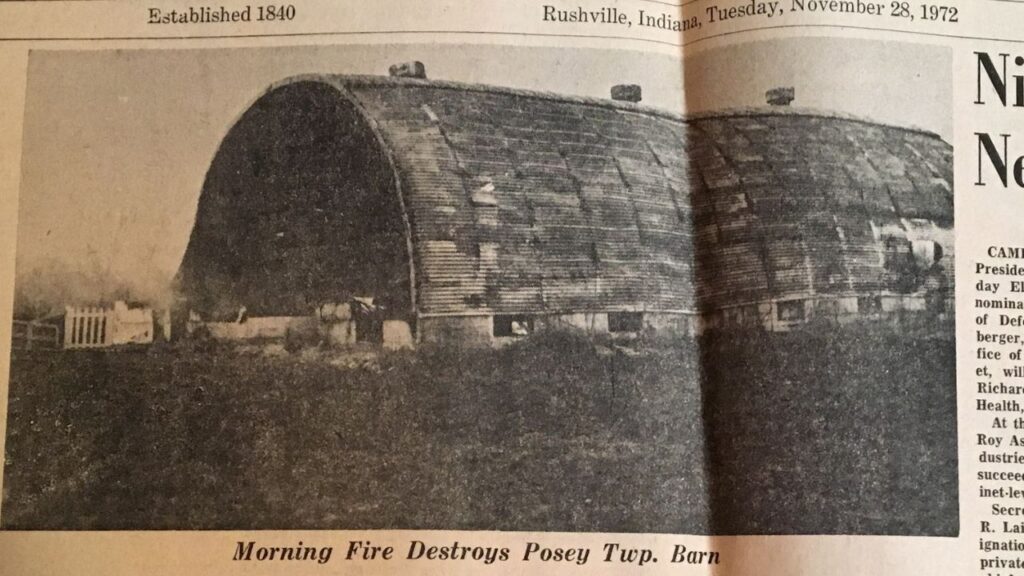
The dairy barn burned down while we were there. The milk barn was in front and the hay barn was attached behind it, with the cows living underneath when they were inside. None of the cows were in the barn when it caught. That was the thing that mattered most and it was true, so we were grateful. But we lost the barn.
My sister and I used to muck out that barn as one of our regular chores. We also spent time up in the hay loft, building forts and tunnels and finding nests to sit in while we petted kittens. The loft had that particular quality that haylofts have, warm and dusty and full of light coming through the gaps in the boards, and we made it ours the way kids make spaces their own.
After the fire, the most urgent thing was finding somewhere for the cows to go, because cows need to be milked twice a day. You do not skip days. You cannot just decide the situation is complicated and come back to it later. The neighbors took them in and we herded them over there, and that was that. The barn was gone. The cows were taken care of. You figure it out and you make it work.
What Is Normal, Anyway
The thing about a childhood like this one is that you do not know it is unusual while you are living it. You compare notes with other people later, when you are an adult and something comes up in conversation that makes you realize not everyone’s childhood involved purple disinfectant and midnight pig chases and a baby duck in the bathtub standing on a brick to reach the water.
I have had to learn how to parse through what I share and when, because it is a lot to track. The undercover police work, the farm, the moving around, the uncle in the Lemon Pipers, the informants at the dining room table. Needless-to-say, it took my husband a long time to fully understand what he had married into. It is a lot for anybody.
As to whether I turned out normal, I genuinely do not know what that means. I turned out like someone who took a deep breath of manure smell on the drive to the grocery store this morning and felt a little like herself. I turned out like someone who knows where food comes from not in an abstract way but in a very specific, grew up working a garden kind of way. I turned out like someone who learned early that when the pigs get out in the middle of the night, you put on your shoes and you go.
So growing up in the 70s, that was pretty amazing and that seems like enough to me.
Want to read more articles about my experiences and the lessons I’m still learning? Go read Ways to Make Extra Money Without a Boss, Shoes, or People, or how my hubby and I Signed Up for a Bob Ross Class and Didn’t Hate Each Other After
Jenny is a content creator, knitting teacher, Amazon Influencer, and former pig farm disinfectant technician. She writes about life after 50, building income in retirement, and everything in between at BigLifeSmallSteps.com.
Find this helpful? Save BigLifeSmallSteps as your go-to resource for real product reviews on Google.
