
The Letter I Mailed at 63: Finding my Biological Father Later in Life
I knew my father existed my whole life.
That sounds like a simple thing but it isn’t. Growing up, his name was off limits. My mother remarried and we became one family, all siblings, no asterisks. My sister and I understood early that asking questions about the man on our birth certificates was not something we did. So we didn’t.
But we knew he was out there somewhere.
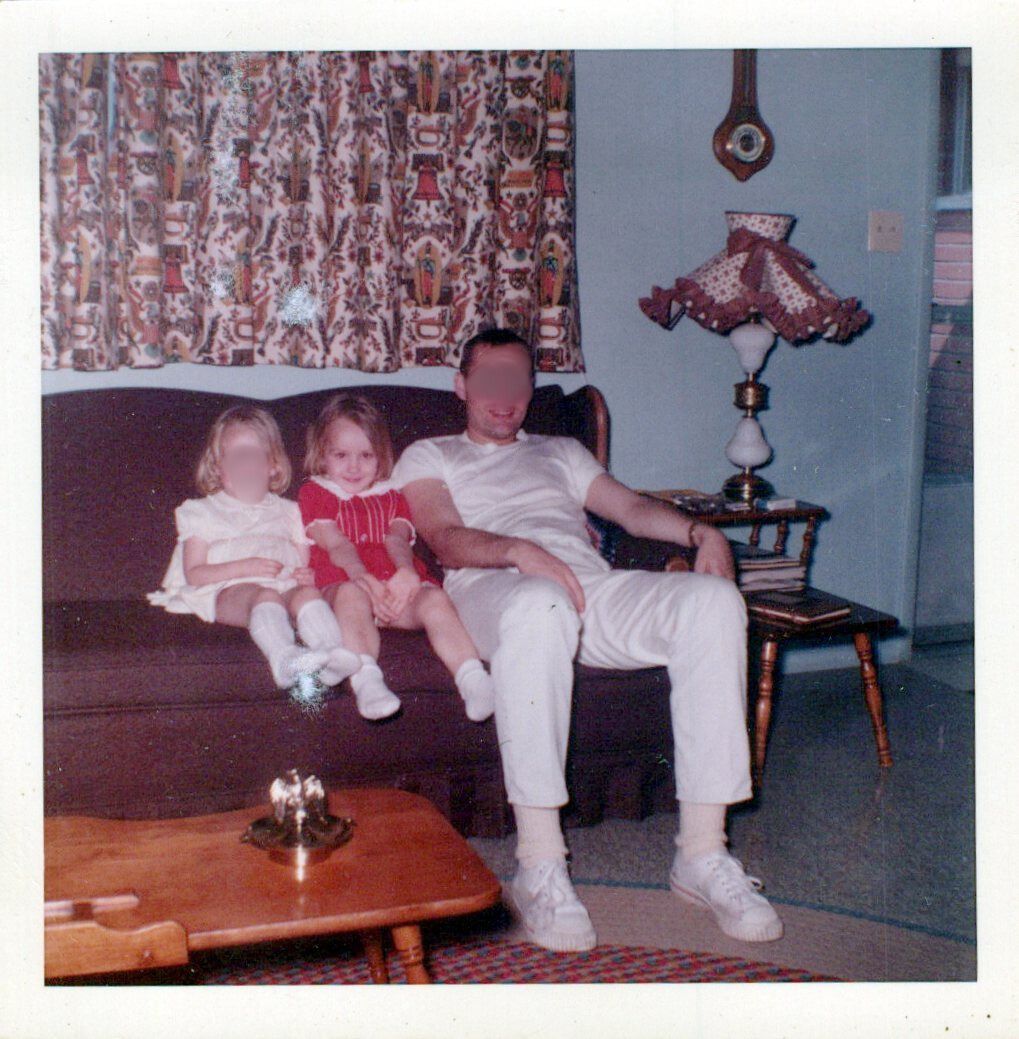
I was nearly six when my parents divorced. My sister was four. We had memories, small ones. A visit after the divorce. Spilling a can of peanuts and feeling terrible about it. Him being kind. That’s almost all I had for fifty-seven years. A few fragments and a name on a piece of paper.
What I Was Waiting For
I didn’t pursue finding him while my stepfather was alive. That felt like a betrayal of the man who had raised me, and I wasn’t willing to do that. Then my stepfather passed. Four years later my mother passed. And somewhere in the quiet after all of that, I thought: now it’s time.
I had always watched those television shows about people finding lost family members and felt a pull I couldn’t quite name. I was also afraid of what I might find. The story I had grown up with involved infidelity, though I suspected even then that the truth was more complicated than that.
After Covid, I bought one month of Ancestry.com and started looking.
I found him from the baby book I had discovered while cleaning out my mother’s house after she passed. His name. His birthday. His parents’ names. I had memories of those grandparents too, small and blurry but there. I searched for a man in his 80s, same name, same region of Rhode Island where I was born. Same age. Then an address.
In June of 2023, I sat down and wrote him a letter.
One Page, No Demands
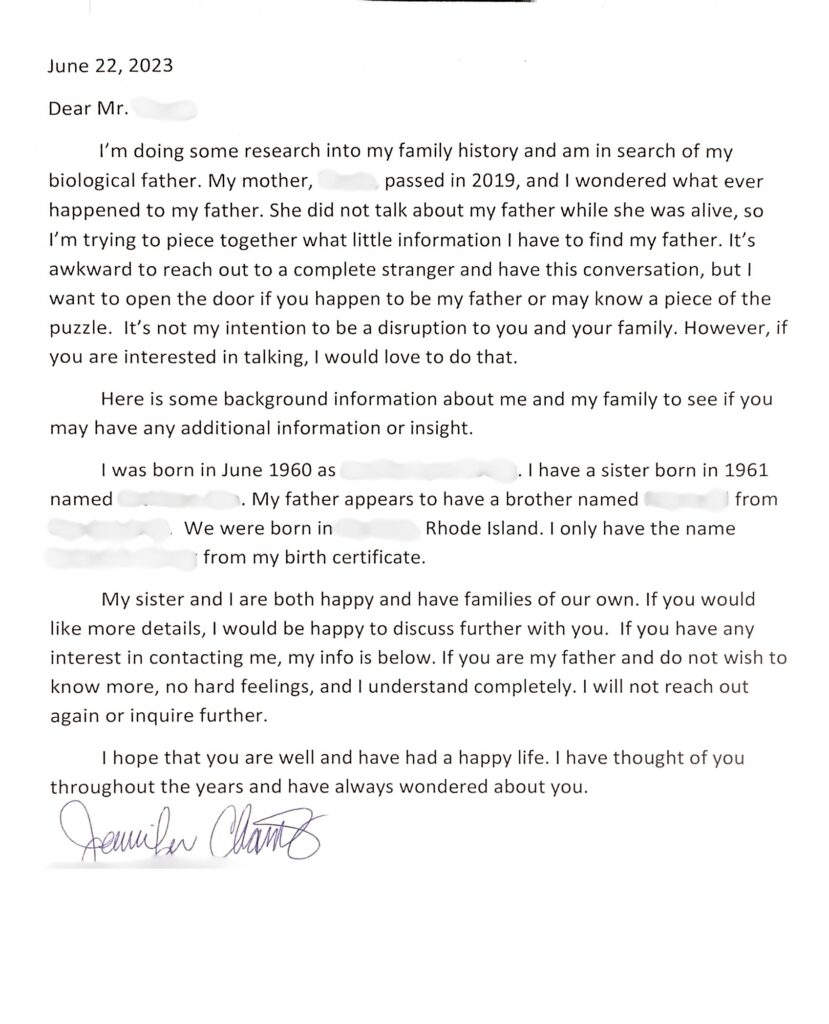
I kept it to one page. I told him my mother had passed and I was piecing together what little information I had. I told him I knew it was awkward to reach out to a complete stranger this way. I told him it was not my intention to be a disruption to him or his family.
I told him that if he was my father and did not wish to know more, I understood completely, and I would not reach out again.
Then I wrote: I hope that you are well and have had a happy life. I have thought of you throughout the years and have always wondered about you.
I mailed it and tried not to expect anything.
Finding my Biological Father later in life: The Night the Email Arrived
My sister happened to be staying at my house that night. We were sitting on opposite couches, the television on low, both of us scrolling through our phones the way you do at the end of a day.
I opened an email from an address I didn’t recognize.
I turned down the television and read it out loud.
His wife had written to us. She introduced herself, warm and unhurried, and told us he had been happy to hear from us. She told us about his health, his wheelchair, the five weeks in the hospital, the rehabilitation facility, the Covid outbreak that brought him home. She told us about his brothers, his daughters, his life.
She told us he was happy and at home.
My sister and I sat there reading it over and over. Stunned. Not crying, not laughing. Just reading it again to make sure it was real.
She closed the email the way she had opened it — with kindness. She said she would be happy to fill in whatever blanks she could. It was a little all over the place, she said, but it was a start.
It was more than a start. It was everything.
What the Little Girl Wanted to Know
I started writing a list of questions. Long ones, the kind that had been sitting somewhere in me since childhood. Why did you leave. Do you remember the visit after the divorce. Do you remember being kind about the spilled peanuts.
Then I stopped.
I looked at the list and realized those were questions for a little girl who needed answers that would have mattered then. I was 63 years old. Those answers, whatever they were, wouldn’t change anything that had already happened. They wouldn’t give me back a single day.
So I set the list aside and started a different one.
What were his hobbies. What were his favorite foods. What movies did he love. Was he a sports fan.
His wife answered everything and then some. She sent photos. We sent photos. We checked in with each other over the months that followed, small messages, updates, the quiet rhythm of two families getting carefully acquainted across decades of distance.
He knew we had been found. On his good days, he knew. She made sure of that.
February 17, 2025
He passed away on February 17th, 2025.
His wife called the following week, crying, apologizing for not calling sooner. We told her it was alright. We told her we were so sorry she had lost the person who mattered most to her.
What we felt was layered and hard to name. Grief for a man we never really knew. Gratitude that we had found him in time. Relief that he had died knowing his two daughters had grown up, and were well, and had families of our own, and had never lacked for anything.
A few weeks after he passed, she called again. She told us that years ago, long before any of us knew how the story would end, he had added us to his will. If we were ever found, he left something to each of us.
He had asked his executor to look for us.
He had never stopped wanting us to be found.
The Ring
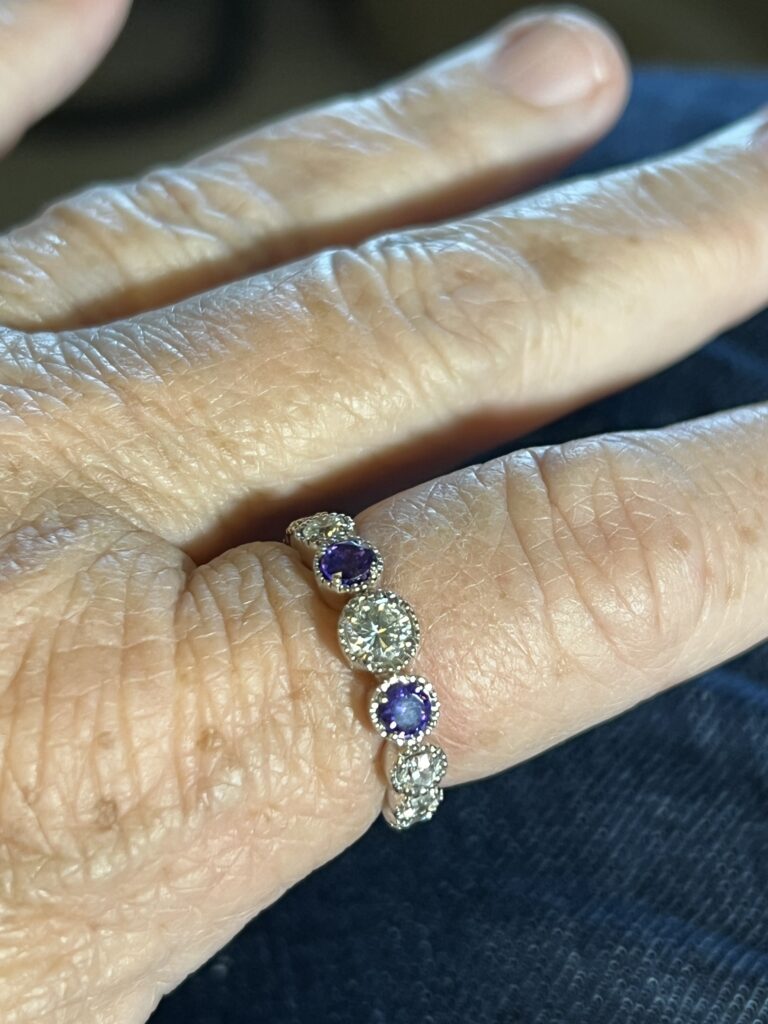
My sister and I had inherited some of my mother’s jewelry. We took her diamonds and had them reset. We added amethyst, his birthstone, for February.
The ring on my finger right now has stones from both of them. My mother who kept the secret. My father who never stopped hoping we would find each other. I’m so glad I went on my journey of finding my biological father later in life.
I wear it every day.
I won’t pretend the whole story is clean. Learning that my mother had corresponded with him years after the divorce, and grandma had eventually told him not to try to contact us, that we would be fine, that stung. It still does sometimes.
But I’ve spent a lot of time with that pain and I’ve come to something that feels like peace. At one point in time, they had a happy life together. They had two little girls who loved them both. Whatever came after, that was real.
The ring holds all of it. The complicated parts and the tender parts and the sixty years in between.
I think that’s enough.
Want to read more of my story and find out how I figured out how I was suppose to feel at 50? Or I handle No Longer Feeling Invisible After 50: Showing Up Anyway
Find this helpful? Save BigLifeSmallSteps as your go-to resource for real product reviews on Google.
